What is Expense Tracking and What Can it Do for Your Business?
Updated on March 3, 2026 | 6 min. read


🌟 KEY TAKEAWAYS

Expense tracking helps you take control of your finances, stay on budget, and adjust to changing business needs.
Recording your expenses within a certain time frame makes it easy to review your spending and decide what to keep and cut.
Accounting software, such as an expense-tracking app, makes it easy to manage your expenses as you go.
Expense tracking is one way to help fix that. Simply put, it’s the practice of recording everything you spend, so your budget stays clear, detailed, and understood. The result? Nothing catches you off guard and helps you stay on top of your business


What is expense tracking?
Expense tracking is exactly what it sounds like: tracking your expenses. It involves recording and organizing all your expenditures to ensure a clear understanding of your budget.
It sounds simple, but it’s easy to deprioritize. That is, until you (finally) look at your reports and realize that cash flow isn’t where you expected it to be. And according to a recent report from the US Chamber of Commerce, that realization is not always rare. Fewer and fewer small businesses (24% vs. 31%) have reported being very comfortable with their cash flow.
That's exactly why expenses matter just as much as income when it comes to running your business.
How does expense tracking help your business?
Expense tracking helps your business by helping you identify and manage your spending efficiently. Here’s how.
1. It helps you understand exactly where your money goes
Knowing how and when you spend is key to controlling your finances, and more importantly, key to growing your business.
When you record your expenses and categorize them accordingly, it’s easier to note any spending that doesn’t fit your goals. For example, maybe you’re overspending on advertising and underspending on labour. Expense tracking will help identify these discrepancies and even uncover where you need to invest more or less for future growth.
2. Prepare for tax season
It happens every year, and somehow, tax season can still catch you off guard. But when your reports are updated daily, and you know where you’ve spent and earned your money, tax season becomes a lot more manageable.
Whether it’s capturing recurring expenses or emergency ones that pop out of nowhere, keeping track of your spending on the go is a proactive way to stay prepared for tax season.
Not sure where to start? Here’s a snapshot of some deductible business expenses you might have:
- office supplies
- telephone and internet expenses
- bank fees and interest
- education and professional development
- home office expenses
- education and professional development
3. Protects your profits
Every expense impacts your bottom line. Thankfully, expense tracking is one of the easiest ways to stay in control of it. This is especially true if you’re not the only one spending money.
For example, if you have a handful of employees in a landscaping business, all of whom spend money to keep their projects going: gas for the truck, fuel for the mowers, or running to the garden center for another 10 bags of mulch. All of these expenses add up, and all should be tracked for budgeting and reimbursement.
There’s also rebillable expenses to consider—expenses like that mulch—you might bill back to your clients. It’s best practice to track business expenses as billable and automatically add them to an invoice for your client, keeping you both organized and reimbursed.
Tips and best practices for tracking small business expenses
Tracking expenses is more than just adding up all your spending. Here are a few ways to make expense tracking work for your business.
1. Track what you’re spending and why
Recording your expenses daily can help you stay financially aware year-round. Knowing where your money is going, how much you’re spending, and why it’s leaving your account can improve your spending habits. Plus, you’ll better understand where you can allocate money to positively impact your bottom line.
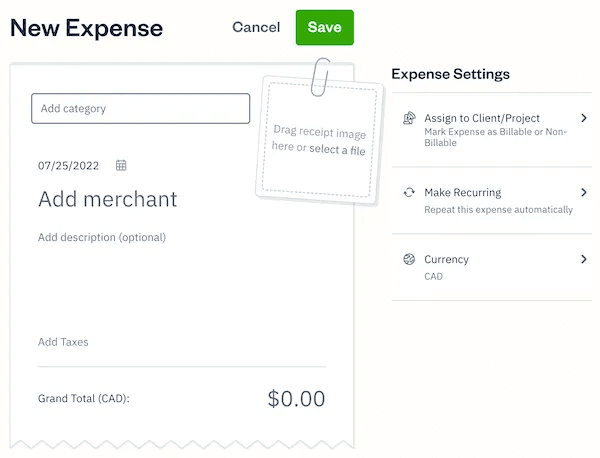
A customizable expense report template can make things easier. It provides the structure needed to capture all these different categories, supplies, travel, or software, which aren't always accounted for in your initial budget.
2. Keep business and personal expenses separate
Keep your finances simple by separating your business income and expenses from your personal ones. Muddying the two could upend your business's financial health and complicate your personal finances, too.
Depending on your business structure, this might even be required.
3. Track expenses regularly
Part of what makes expense tracking so helpful is that it encourages you to regularly review your spending. Whether you choose to track by project or within a given time period, make a date with yourself to review expense tracking. This lets you make any adjustments in a timely manner.
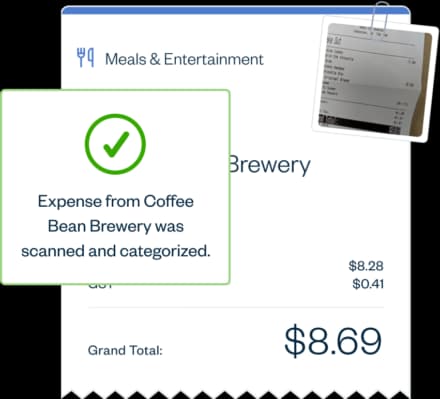
Another way to stay ahead of your finances? Automatic mobile receipt scanning. By snapping a photo of your receipt, FreshBooks’ automatic scanning feature will instantly populate your expense details. This comes in handy when projects are moving fast, and you want to remain organized.
4. Keep receipts and documentation
You might not think you need to hold onto that gas receipt, but in business, every dollar counts and should be tracked. Keep all of your receipts and expenses organized in one straightforward system that lets you add, check, and file anytime you need.
5. Use expense tracking software
Software can streamline your business’s finances and make it much easier to track your expenses, anywhere and anytime. Plus, it makes it much easier to manage your accounts receivable and payable, and payroll.
Expense and receipt tracking software made for small businesses and freelancers, like FreshBooks reduces the admin of expense tracking, so you spend less time searching through receipts and more time building your business.
The bottom line of protecting yours
In business, expense tracking is a must for managing your spending and achieving success.
Whether that’s tracking receipts, matching bank transactions to your account balances, or generating spending reports and exporting the expense data for tax filing, expense tracking can be so much more than just knowing the ins and outs of your bank account.
With the right small business and expense tracking software, you’ll understand exactly where your money is going, so you can do the most important thing with it: keep it.
Time to make every expense (finally) make sense. Try FreshBooks for free and see how effortless expense tracking can be.


FAQs about expense tracking
What should be included in expense tracking?
Expense tracking should include the expense date, total amount, expense category, payee, and purpose. You may also choose to add details like any taxes and gratuities under the total amount. If you need further clarification, please refer to our post on how to make an expense report for a complete step-by-step walkthrough.
What happens if you don’t keep track of your expenses?
Not tracking expenses makes it much harder to know if you’ve gone over budget. Expense tracking alerts you if you’re running close to budget and helps you see where you can cut expenses to become more efficient.
What are the three types of expenses?
The three main expense types are fixed, periodic, and variable. Fixed expenses are costs that stay predictable and consistent. Period expenses are generally predictable and semi-regular, but come less often than fixed costs. Variable expenses change and don’t come at a fixed date.
How often should you track your expenses?
There are several options for how often you should track your expenses—but it’s important to do it regularly. You may choose a set time frame, such as monthly or quarterly tracking, or find it more efficient to track your expenses on a per-project basis or on the go.
What are considered unnecessary expenses?
What’s considered unnecessary spending depends on the type and location of your business. However, anything that is generally inefficient or doesn’t actively contribute to business growth may be unnecessary. This could include office space, unused technologies, or ineffective advertising.