How Is Interest Income Taxed and Reported
Updated on February 24, 2026 | 6 min. read


🌟 KEY TAKEAWAYS

Interest income includes all money you earn for lending your money, including funds in your savings accounts and certificates of deposit (CDs).
You must pay federal income tax on any interest you earn during the year, unless it’s tax-exempt. Tax-exempt interest income is not subject to federal income taxes and includes interest earned on municipal bonds, non-Roth 401(k)s, health savings accounts, or traditional individual retirement accounts (IRAs).
If you fail to report your interest income on the federal income tax return, you may be subject to the IRS accuracy-related penalties and interest. Willfully underreporting income may result in criminal charges.
In this article, we’ll explore how much interest income is taxable, the types of taxable income, how to report it, and what happens if you don’t report it to the IRS.
Table of Contents
- What is interest income?
- Tax rate on interest income
- What are the types of interest income that are taxable?
- What interest income is not taxable?
- How to report your interest income on your taxes?
- Penalties for failing to report interest income
- Simplify financial management with FreshBooks
- Frequently asked questions
What is interest income?
Interest income is income earned on interest from investments, loans, or savings accounts. It may include interest earned in high-yield savings accounts, checking accounts, mutual funds, U.S. savings bonds, corporate bonds, and any interest-bearing accounts.
The interest earned in these accounts is considered taxable interest, meaning paying taxes on the year’s earnings is expected by the IRS, the same as it would be with any other income.
Some interest income is not subject to federal taxation (for example, interest earned on municipal bonds).


Tax rate on interest income
Interest income is taxed at the same rate as your ordinary income, subject to your marginal tax rate, and which tax bracket you fall into.
The federal income tax rates and brackets for 2025 are as follows [3]:
Tax Rate | Single Taxpayer | Married, Filing Jointly | Married, Filing Separately | Head of Household |
10% | $0 to $11,925 | $0 to $23,850 | $0 to $11,925 | $0 to $17,000 |
12% | $11,926 to $48,475 | $23,850 to $96,950 | $11,925 to $48,475 | $17,000 to $64,850 |
22% | $11,926 to $48,475 | $96,950 to $206,700 | $48,475 to $103,350 | $64,850 to $103,350 |
24% | $103,351 to $197,300 | $206,700 to $394,600 | $103,350 to $197,300 | $103,350 to $197,300 |
32% | $197,300 to $250,525 | $394,600 to $501,050 | $197,300 to $250,525 | $197,300 to $250,500 |
35% | $250,525 to $626,350 | $501,050 to $751,600 | $250,525 to $626,350 | $250,500 to $626,350 |
37% | $626,350 or more | $751,600 or more | $626,350 or more | $626,350 or more |
Taxes are assessed progressively, meaning if you are a single filer in the 24% tax bracket, you’re not paying 24% on all your yearly income. The first $11,925 you earn will be taxed at 10%; the amount up to $48,475 will be taxed at 12%; the amount up to $103,350 will be taxed at 22%; and the rest will be taxed at 24%.
If you’re a high-income earner, you may also have to pay the net investment income tax (NIIT) rate of 3.8%. The thresholds for net investment income tax are:
- Head of household or single taxpayer: $200,000
- Qualifying widow(er) with a child, and married couples filing jointly: $250,000
- Married couples filing separately: $125,000
What are the types of interest income that are taxable?
Most of the interest you receive is taxable in the year it becomes available to you. This includes:
- U.S. savings bonds, except for interest redeemed from Series EE and Series I bonds that were issued after 1989, if they were used to pay for qualified educational expenses, and if you meet the Educational Savings Bond Program requirements.
- Treasury bills, treasury bonds, and treasury notes.
- Corporate bonds.
- Certificates of deposit (CD).
- Mutual funds.
- Exchange-traded funds (ETFs).
- Personal loans you make to others.
Some more examples of taxable interest provided by the Internal Revenue Service [2] include:
- Interest on bank accounts, including your savings accounts, checking accounts, etc.
- Money market accounts
- Deposited insurance dividends, except for interest on insurance dividends left on deposit with the U.S. Department of Veterans Affairs, which is tax-exempt.
What interest income is not taxable?
Taxpayers may wish to invest some of their money into IRAs, health savings accounts, and 401(k)s.
Some interest-earning accounts that aren’t immediately taxable include:
- Municipal bonds are exempt from federal taxes, and may also be exempt from state taxes if they are issued by a state in which you file taxes.
- Non-Roth 401(k)s.
- Health savings accounts.
- Traditional Individual Retirement Accounts (IRA), although you will end up paying taxes on your withdrawals in the future.
While these are not considered taxable, they come with restrictions on how the money in the accounts can be used, often with penalty fees and taxes imposed if you withdraw early.
How to report interest income on your taxes?
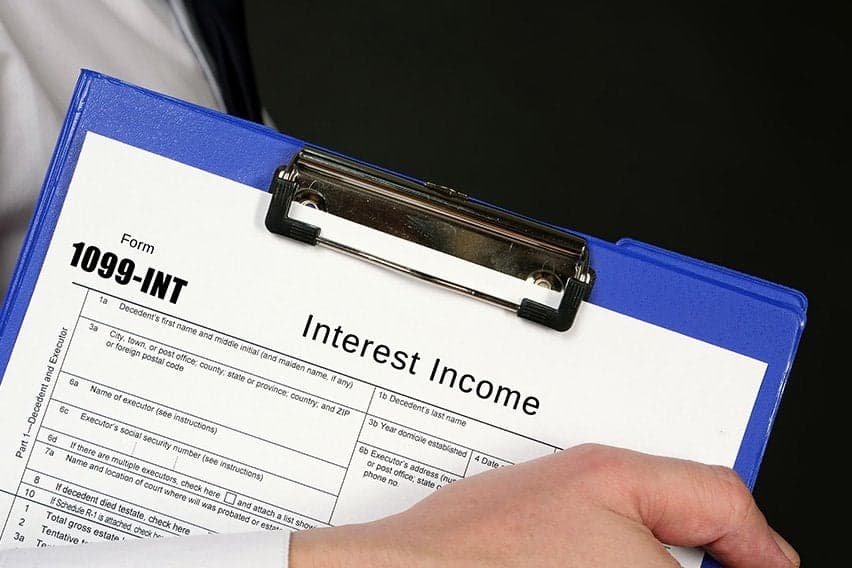
If you earn interest from a bank or financial institution, they’ll send you a Form 1099-INT or a Form 0199-OID tax form, giving you all the information you’ll need to include on your tax return. This may also come as part of a composite broker statement. If the amount exceeds $1,500 for the tax year, you must also report it on Schedule B of your 1040 federal tax return.
Even if you don’t receive a Form 1099-INT, you must report your interest income, no matter the amount, whether it’s taxable or not, or you may face penalties. While most financial institutions will send the forms for you, some may not, so it’s crucial to track all your earned interest yourself, no matter how small the amount.
Penalties for failing to report interest income
Inaccurately reporting your income can cause trouble for you at the federal level, depending on the amount of income taxes you owe, as can missing important tax deadlines. Some consequences you could expect to face include:
- Unreported income penalties: you may have to pay penalties and be subject to backup withholding until the amount due is paid in full.
Accrued interest charges: you’ll have to pay interest on any amount due. The interest rate is determined quarterly based on the federal short-term rate, plus 3%. 4
- Failure-to-file penalty: this is usually 5% of the tax owed for each month, up to a maximum of 25% if you fail to file. You may also have to pay the lesser of $485 or 100% of the tax owed if your return is more than 60 days late.
- Criminal investigation: if you’re suspected of tax evasion, you may be subject to an IRS criminal investigation.
Simplify financial management with FreshBooks
Using FreshBooks accounting software can simplify the way you track and manage your interest income. FreshBooks automatically categorizes financial transactions, maintains organized records, and provides easy access to important documents during tax season. With its clean, simple interface, staying updated and on track is easier than ever.
You can try FreshBooks free today and see how upgrading to this powerful financial management software can make a difference in your day-to-day operations. No credit card is required, and you can cancel at any time.


FAQs about tax on interest income
Do you still have questions about how interest is taxed or what happens if you exceed the interest income reporting threshold? You may find the answers you’re looking for below.
How to avoid tax on interest income?
To earn interest without an additional tax burden at the end of the year, you could leverage tax-advantaged accounts like Roth IRAs or health savings accounts. These allow some contributions, growth, and withdrawals without tax penalties. Make sure to read the fine print to ensure your actions remain legal, and you’re not surprised by a hefty tax bill from the IRS.
What if I have more than $1500 in taxable interest income?
If you have earned over $1,500 in interest income, then you must report it on Schedule B of your 1040 federal income tax return, as well as on Form 1099. The IRS will ensure you pay federal taxes (and sometimes state taxes) on that income the same as your regular earnings.
How much interest can I earn without paying taxes?
Legally, you must pay taxes on any interest you earn, even if it’s only a dollar, as it’s taxable income. The bank may not send you a 1099-INT form for an amount under $10, but you must still report your earnings.
Do I have to file taxes if I only have interest income?
Yes, you have to file your taxes and report all interest income. As far as the IRS is concerned, interest income is the same as any other type of earned income, and it is taxed accordingly. This includes guaranteed investment certificates, bank interest, and term deposits.
Do you pay taxes on interest earned on a CD?
Yes, CD interest is subject to the same income tax as your regular gross income. The more money you earn in interest, the more taxes you’ll pay at the end of the tax year.
Article Sources
- apps.irs.gov. “Tax Tutorial Module 3: Interest Income.” Accessed August 12, 2024.
- irs.gov. “Topic no. 403, Interest Received.” Accessed August 12, 2024.
- irs.gov. “Federal income tax rates and brackets.” Accessed August 12, 2024.
- irs.gov. “Topic no. 653, IRS notices and bills, penalties, and interest charges.” Accessed August 12, 2024.