Owner’s Draw vs. Salary: Paying Yourself as a Business Owner
Updated on September 21, 2026 | 11 min. read



🌟 KEY TAKEAWAYS

There are two main ways to pay yourself as a business owner: an owner's draw or a salary.
An owner's draw isn't a fixed paycheck; it's a flexible withdrawal from your owner's equity.
A salary works the same way it would for any employee: a set amount on a set schedule.
Consider your profits, business structure, and business growth when deciding how to pay yourself as a business owner.
You started your business to make money, so why does paying yourself feel like one of the hardest financial decisions you have to make? Between unpredictable profits, reinvesting in growth, and not knowing how much is “fair,” most business owners end up guessing how to pay themselves a personal income, or putting it off altogether.
Whether you’re a sole proprietor, a corporation, or a partner in a partnership, the goal is to pay yourself enough to live on without draining your business. Here’s what you need to know about paying yourself an owner's draw or a salary, plus what each option means for your income tax.
Owner's draw vs. salary
Business owners can pay themselves in a few different ways, but the two most common are an owner’s draw and a salary. Here’s how they differ.


Paying yourself with an owner's draw
An owner’s draw is a withdrawal of any amount from your business funds, and you can take one whenever you need it. The catch is you can only draw as much as your owner’s equity allows.
Owner’s equity is your share of the business’s assets. It’s usually your initial investment plus any profits you haven’t taken out of the business yet.
For example, say you invested $50,000 into your business. In Year One, your share of the profit is $25,000. At the end of the year, your owner’s equity account is $75,000. If you withdraw $30,000, your owner’s equity goes down to $45,000.
Pros and cons of an owner’s draw
The biggest perk of an owner’s draw is flexibility. Your paycheck can flex with your business. You build up more owner’s equity during a strong-profit quarter, meaning you take a bigger draw.
The trade-off is it’s less predictable than a salary. If you don’t have enough owner’s equity or enough cash on hand, you might not get to take a draw. And since taxes aren’t withheld from a draw the way they are from a paycheck, you have to set money aside throughout the year so you’re not caught off guard at tax time.
How are owner's draws taxed?
The tax part trips a lot of people up, because you don’t pay taxes on the amount you draw from the business. If you’re a sole proprietor or a partner in a partnership, you owe income tax on your full share of the business’s profit for the year, whether you draw all of it, some of it, or none of it. Taking a smaller draw won’t shrink your tax bill.
Plus, those profits are subject to self-employment tax as well as federal (and possibly state) income tax. Self-employment tax covers your Social Security and Medicare contributions since you don’t have an employer withholding them for you. You typically need to pay these as estimated taxes throughout the year rather than in one lump sum.
Another common mistake is treating owner draws as a business expense. Owner draws reduce your owner’s equity account. They’re not an expense, so they don’t reduce your taxable income. This is another reason it’s important to plan for this and set aside enough money to pay tax at the end of the year.
Paying yourself with a salary
Some types of business entities require the owner to pay themselves a salary instead of a draw. It works a lot like a regular employee’s paycheck. You set your own wages and pay yourself on a regular schedule.
Salaries are required if you’re a corporate shareholder or the owner of an LLC that’s elected to be taxed as a corporation. You can’t pay yourself solely through draws. You need to pay yourself reasonable compensation for the work you do. Once that’s covered, you can take additional money out as a distribution.
When you pay yourself a salary, you withhold federal (and sometimes state) taxes from each paycheck. That includes income taxes and Federal Insurance Contributions Act (FICA) taxes, which include Social Security and Medicare. As your business grows, you can give yourself a raise or add on quarterly or annual bonuses.
Pros and cons of a salary
The biggest upsides to paying yourself a salary are predictable income and simpler tax preparation. A steady paycheck means reliable cash flow, which comes in handy when you apply for credit or a mortgage.
Your payroll provider withholds federal income tax (and often state income tax, depending on where you live) automatically. So you don’t have to set aside a chunk of every payment for tax time.
The biggest downside to taking a salary is figuring out “reasonable compensation.” The IRS doesn’t offer a one-size-fits-all formula for reasonable compensation, so you have to land on a figure that satisfies your own needs and the IRS rules.
If the IRS considers your salary too low for the services you provide to the business, it assumes you’re paying a low wage to minimize self-employment tax. It can recharacterize some of your distributions as wages and assess back payroll taxes, penalties, and interest.
How is salary taxed?
A salary is taxed the same way as any employee paycheck. Each pay period, the business withholds federal (and sometimes state) income tax and FICA taxes, and sends those amounts to the government on your behalf.
Whether you get paid via an owner draw or a salary, you owe income taxes on 100% of your share of the business’s profit. However, you only pay Social Security and Medicare taxes on your salary, not on any distributions paid on top of it. This is one reason some LLCs elect to be taxed as S corporations. In some cases, it lowers their overall tax burden
Which option is best for you?
The best payment method for you depends on a few factors, but the most important is your business structure. We’ll cover those in more detail below.
Regardless of whether you pay yourself a draw or a salary, always pay yourself from your business’ profit, not revenue. And remember you owe income taxes on your profit no matter how you take it. So build tax planning into your strategy rather than treating it as an afterthought
How do business owners pay themselves?
Before you are even faced with deciding how to pay yourself, you need to decide what kind of structure you want for your business. Your business structure affects many aspects of your operations, including how you pay yourself as a business owner.
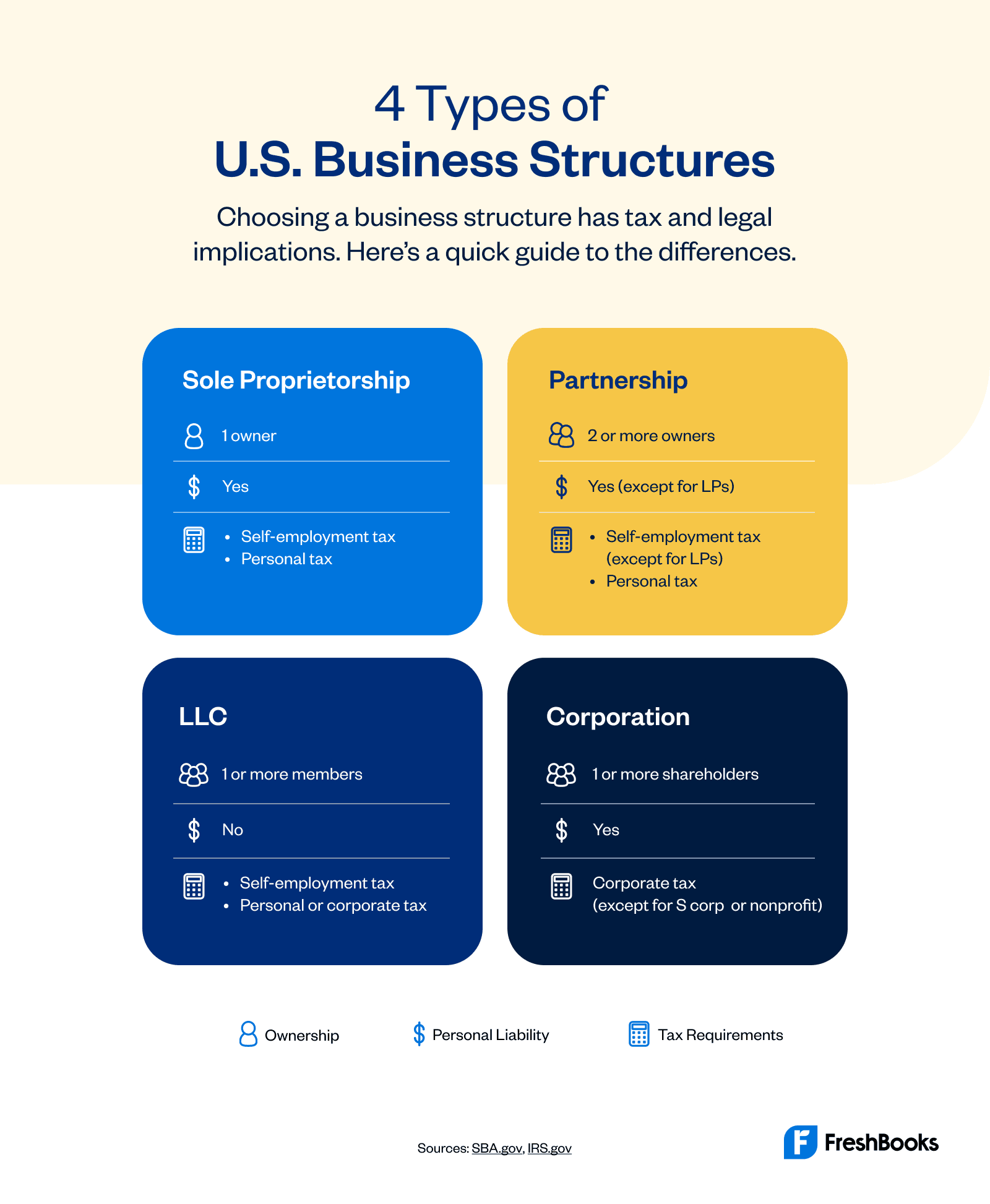
Below are the 4 main types of businesses and the recommended payment method (owner’s draw vs. salary) for each.
Sole proprietorship
Most businesses start as sole proprietorships since it’s the simplest and cheapest structure to set up. As a sole proprietor, you and your business are legally the same entity. All profits are yours, but you also have full personal liability if something goes wrong.
Sole proprietors typically pay themselves through a draw, which reduces owner’s equity. You pay taxes on 100% of business profits, regardless of how much you actually draw. And you report business revenues and expenses on Schedule C attached to your personal income tax return (Form 1040).
Partnership
In a partnership, you and one or more partners share business profits based on your ownership share and what your partnership agreement spells out. Like a sole proprietorship, partners are personally liable for the business’s losses.
Partners typically take money as a draw against their profit share. You can’t pay yourself a salary in a partnership, but you can receive guaranteed payments for services you provide to the business. Guaranteed payments are separate from your profit share, and you owe income tax on them in addition to reporting them on your personal tax return.
Limited liability company
A limited liability company (LLC) is a business structure that’s separate from you as an individual. If the business faces losses or a lawsuit, your personal assets are generally protected.
By default, LLC members take a draw from profits, whether they’re running the business solo or with partners. Single-member LLCs pay taxes like sole proprietors, and multi-member LLCs pay taxes like partnerships. LLCs can also elect to be taxed as C corporations or S corporations instead.
Corporation
A corporation usually has multiple owners, or shareholders, none of whom are personally liable for the company’s losses. There are two main types of corporations: S corps and C corps.
In an S corp, shareholders who work in the business must pay themselves a reasonable salary. After that, they can take additional profit as a distribution. Distributions aren’t subject to self-employment tax the way salary is.
A C corp can pay shareholders dividends, but C corp profits face double taxation. The corporation pays taxes on profits at the company level, and shareholders pay taxes on dividends on their personal income tax returns.
Shareholders who work for the business typically receive both a salary and dividends.
How much should you pay yourself?
Now that you know the difference between a draw and a salary, the next question is how much you should take home. You don’t want to pay yourself too much and drain your business, but you also don’t want to take less than you’ve earned and need to live on.
Here are the main factors to consider.
Entity type
How you structure your business affects how you pay yourself, whether it’s a draw, a salary, or a mix of the two. If you haven’t settled on a structure yet, start there. Once that’s decided, the rest of the questions get a lot easier to answer.
Profits
Technically, you can take out as much as you want, especially as a sole proprietor or single-member LLC. But a draw or salary that’s too large can put a strain on your business.
Look at your profits and cash flow before deciding on your paycheck. Make sure you leave enough to cover operating expenses, taxes, and reinvesting in growth. And keep paying yourself from profit, not revenue.
Business expenses and needs
How much you take home can change depending on your business's stage. Early on, or during a slow stretch, you may need to take smaller draws or paychecks until you regularly turn a profit. When business is strong, you can afford to pay yourself more as a reward for the work you put in.
That flexibility can make budgeting tricky, but it also means you can adjust as things change.
What your work is worth
You’re providing value to your business, and it’s worth factoring that into your pay. Consider your experience, what you’d earn in a similar role elsewhere, hours worked, and what other business owners in your industry typically take home.
Location and business size matter, too. A salary that makes sense at a large company in a major city might not translate to a small business in a smaller market.
Personal expenses
Running your small business might be a full-time job, and full-time work deserves a living wage. At a minimum, your pay should cover your personal expenses, like housing, food, and transportation, with some room left over for savings.
A few things to keep in mind
- Stay consistent. Whether you pay yourself with an owner’s draw or a salary, stick to a regular rhythm. This makes budgeting easier for you and the business.
- Pay your team first. When cash flow is tight, pay employees and suppliers before you pay yourself. Putting your own paycheck first can hurt morale and pull funds away from what keeps the business running.
- Don’t take all of your profit. Leave some profit in the business to allow for investments and growth. You can always pay yourself more once the business is in a stronger financial position.
Putting it into practice
Paying yourself as a business owner can feel tricky at first, but it gets easier with time. Owner’s draw and salary each have their advantages, so let your business structure guide which one fits you best. You can even choose to use both; just remember they’re taxed differently, so work with a tax pro to ensure you’re withholding enough tax or setting aside money to cover your tax bill.
Also consider how you want your business to grow. Your business isn’t an unlimited source of cash, so think through the impact before you dip into your accounts. And whichever method you choose, keep clear records of all revenues, expenses, and draws so you can accurately report your income at tax time.
If you’re looking for a tool to help you manage your income and expenses, FreshBooks offers user-friendly invoicing, expense tracking, and reporting software. It makes it easy to track income and expenses, generate financial reports, and estimate your taxes, all from a cloud-based platform you can access from anywhere, at any time.
Frequently asked questions
What is the owner-draw tax rate?
There’s no set rate for the owner’s draw. The only restrictions are your owner’s equity and what you consider a reasonable amount to keep your business healthy and growing.
Is an LLC owner's draw taxable?
Yes, but not directly. LLC owners pay taxes on 100% of their share of the business profits, whether they take draws or leave money in the business to reinvest in growth. A single-member LLC is taxed like a sole proprietorship, while multi-member LLCs are taxed like a partnership.
What percentage should business owners pay themselves?
There’s no fixed percentage to aim for. Let your business’s growth guide the decision. Factor in what you need to pay employees and suppliers, what you need to reinvest, and what’s left for taxes. Then take a reasonable amount from there.
How to report your owner's draw on taxes?
It depends on your entity type. Sole proprietors pay taxes on the business’s profits, regardless of the size of the draw. Partnerships work similarly, but each partner reports their share of the profit on their personal tax return.